

Data loss prevention stops sensitive information from leaving your organization without authorization, whether that's a file emailed to the wrong address or a contractor pulling customer records to a personal drive. Coverage spans three states: data in motion (moving across networks), data at rest (sitting in storage), and data in use (open on a screen, copied to a clipboard, or pasted into a chat window). If you're starting from zero, the single highest-leverage move is automated discovery and classification, because you cannot protect data you haven't found and labeled yet.
The NIST Cybersecurity Framework and Microsoft's DLP guidance both frame DLP the same way: identify what's sensitive, then protect it with layered controls rather than a single blocking rule. That order matters more than the tooling you buy.
- Definition: DLP prevents unauthorized disclosure or exfiltration of sensitive data across motion, rest, and use.
- First move: Run automated discovery and classification before writing a single enforcement policy.
- Foundational references: NIST NCCoE practice guides and Microsoft Purview documentation, not any single vendor's marketing claims.
Pro Tip: If you can't yet say where your regulated data lives, don't buy a DLP tool. Buy a discovery scan first. Enforcement without an inventory just generates noise.
Key Takeaways
Data loss prevention succeeds when discovery and classification come before enforcement, and when monitoring runs long enough to tune policies before they block real work.
| Point | Details |
|---|---|
| Start with discovery | Map where sensitive data actually lives before writing any enforcement policy. |
| Monitor before blocking | Run a full monitoring cycle to surface false positives before turning on enforcement. |
| Match architecture to channel | Combine network, endpoint, and cloud DLP since no single model covers every data state. |
| Build in governance | Assign classification ownership across compliance, IT, and business data owners to prevent drift. |
| Consider managed operations | Marfi pairs a 24/7 SOC with unified policy ownership to keep DLP tuned and audit-ready over time. |
Table of Contents
- What Data Loss Prevention Is and Why It Matters
- Benefits and Limitations of DLP You Should Plan For
- What Causes Data Loss and Leakage
- Network, Endpoint, and Cloud DLP: Matching Coverage to Risk
- Planning a Phased DLP Rollout That Doesn't Break the Business
- Data Classification and Governance That Doesn't Drift
- Monitoring, Detection, and Response Built Around DLP
- How a Managed Provider Operationalizes DLP Day to Day
- Where to Read the Standards Yourself
- The Standards Are Clear. Most Rollouts Ignore Them Anyway
- Get DLP Running Without Adding Headcount
- Frequently Asked Questions
- Sources
What Data Loss Prevention Is and Why It Matters
DLP is a set of technical controls and organizational processes built around one goal: keeping confidential information from leaving your control without permission. That's a narrower mission than "cybersecurity" broadly. Firewalls and endpoint detection stop intruders from getting in. DLP focuses on what happens to your data once someone, inside or outside, has access to it.
The regulatory pressure behind this is not abstract. Healthcare organizations answer to HIPAA. Retailers and payment processors answer to PCI DSS. Companies handling consumer data face CCPA and, for anyone touching EU residents' information, GDPR obligations. Each of these frameworks expects you to demonstrate that you know where sensitive data lives and that you've applied controls proportional to its risk. A DLP program generates exactly the evidence auditors ask for: access logs, policy enforcement records, and classification history.
The operational cost of getting this wrong goes beyond fines. A breach disrupts normal business for weeks, forces emergency legal and forensic spending, and erodes the trust that took years to build with customers and partners. NIST's SP 1800-28 practice guide recommends mapping DLP controls to the Identify and Protect functions of the Cybersecurity Framework: discovery, classification, access controls, encryption, and policy enforcement, in that order.
- Regulatory drivers push DLP from a "nice to have" to a documented requirement in regulated industries.
- Breach costs include operational downtime and long-term trust damage, not just direct remediation.
- NIST practice guides give you a control mapping instead of leaving you to invent one.
- Confidentiality, not just availability, is the specific problem DLP addresses.
Benefits and Limitations of DLP You Should Plan For
DLP delivers real, measurable value, but only if you go in with clear eyes about what it won't do on its own.
- Visibility you didn't have before. Discovery scans routinely surface sensitive files sitting in shared drives nobody remembered existed.
- Prevention at the point of action. Policies can block, quarantine, or require justification before a risky transfer completes.
- Audit evidence on demand. Policy hit logs and classification records answer "prove it" questions from auditors without a scramble.
- Compliance support, not compliance guarantee. DLP is one control among several a regulator expects, not a substitute for the full program.
The limitations are just as concrete. False positives are the most common complaint from security teams: an aggressive policy flags legitimate business activity, users route around it, and the whole program loses credibility. API-only SaaS platforms create blind spots because traffic never crosses a network chokepoint your tools can inspect. And DLP is not "set and forget." Someone has to tune rules, review alerts, and update classification as the business changes.
Three practices cut these limitations down to size: phased enforcement instead of a hard launch, context-aware policies that weigh user role and device posture instead of pattern matching alone, and integration with identity signals so a policy decision reflects who someone is, not just what they're doing. Monitoring in the first 30 to 60 days before you turn on blocking usually reveals where accidental sharing is actually happening, which is exactly the evidence you need to tune policies before they affect real work.
Pro Tip: Don't launch in block mode. Launch in monitor mode, let it run a full business cycle, then flip the switch on your highest confidence rules first.
What Causes Data Loss and Leakage
Most data loss isn't a hooded hacker. It's someone attaching the wrong spreadsheet to an email or setting a cloud folder to "anyone with the link."
- Accidental leakage: Misconfigured cloud shares, mis-sent emails, and collaboration links left open to anyone are the most common category by volume.
- Insider risk: Negligent employees moving data carelessly and malicious insiders or contractors deliberately taking data both fall here, and they require different controls.
- External exfiltration: Credential compromise, malware, and covert channels used by outside attackers to move stolen data out.
- Ransomware and integrity attacks: Related but distinct. These threaten data availability and integrity, and a DLP program should coordinate with backup and recovery planning rather than treat them as the same problem.
Generative AI tools add a newer wrinkle to the accidental category. Employees paste proprietary code or customer records into a chat prompt without thinking of it as "sharing data" at all, and DLP policies increasingly need to extend to AI interfaces to catch this before it becomes routine.
Network, Endpoint, and Cloud DLP: Matching Coverage to Risk
No single deployment model covers every channel, which is why most mature programs run more than one.
Network DLP inspects traffic at centralized egress points, making it effective for catching bulk exfiltration attempts as they cross the perimeter. Its weak spot is encrypted traffic and cloud-native APIs that never pass through a chokepoint your appliance can see. If your workforce lives in SaaS applications, network DLP alone leaves real gaps.
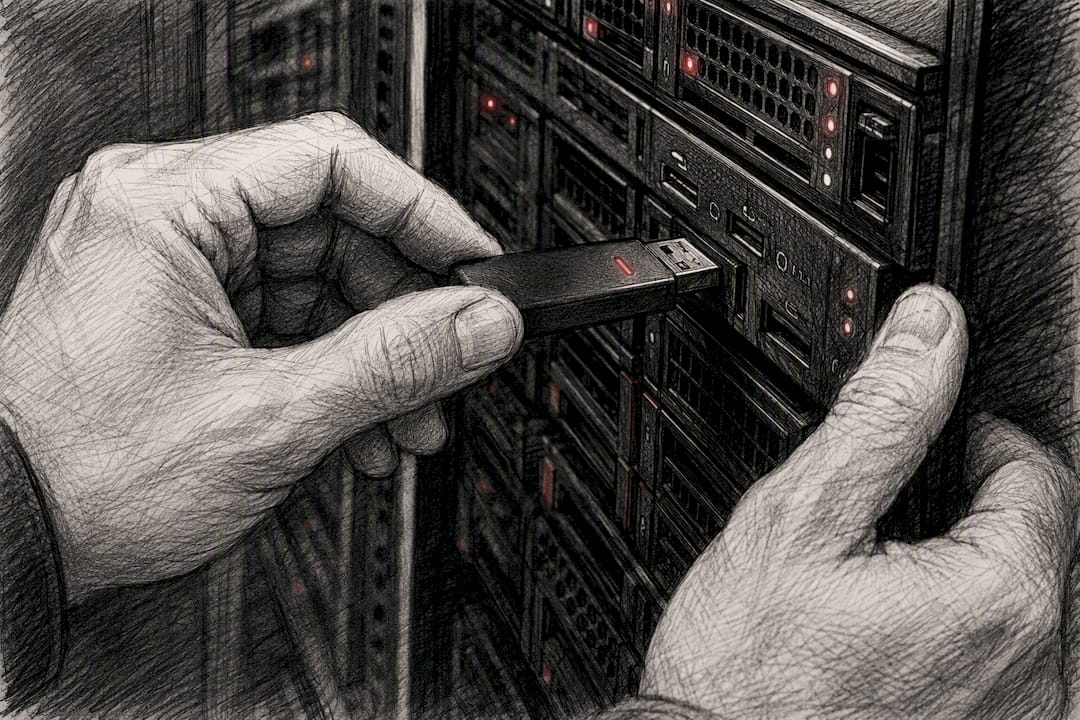
Endpoint DLP runs an agent on the device itself, which means it can enforce data-in-use rules: blocking a copy-paste into an unauthorized app, restricting USB transfers, or applying policy even when the laptop is offline. The trade-off is agent management overhead and a real performance cost on lower-spec hardware, plus the operational burden of keeping agents updated across a fleet.
Cloud and API DLP enforces policy natively inside collaboration and storage platforms, which is where Microsoft Purview's DLP capabilities focus their guidance. This model scales well for organizations that have already consolidated on a small number of major SaaS providers, since enforcement happens where the data actually lives rather than at a network boundary that traffic may bypass entirely.
Two complementary disciplines round out the architecture. DSPM (Data Security Posture Management) handles discovery and classification of data at rest, feeding DLP the inventory it needs to enforce anything at all. CASB tools extend visibility into shadow SaaS applications nobody officially sanctioned. Identity integration layers user context and device posture on top of both, which is what turns a blunt pattern-matching rule into a decision that accounts for who's actually doing the sharing.
- Network DLP: strong at the perimeter, blind to encrypted and cloud-native traffic.
- Endpoint DLP: covers data in use and offline scenarios, at the cost of agent overhead.
- Cloud/API DLP: enforces policy natively inside SaaS platforms.
- DSPM and CASB: fill the discovery and shadow-IT gaps that DLP alone doesn't cover.
Planning a Phased DLP Rollout That Doesn't Break the Business
The organizations that get burned by DLP almost always made the same mistake: they bought a tool before they had a plan. A phased rollout fixes that by sequencing effort so each stage produces evidence the next stage needs.
- Governance first. Identify stakeholders across compliance, legal, IT, and the business units that own the data, and define who escalates what when a policy fires.
- Discovery and inventory. Run automated scanning and DSPM tooling to map where sensitive data actually sits and how it flows between systems.
- Build the classification scheme. Tie labels like public, internal, confidential, and restricted to specific business risk tiers, not arbitrary categories.
- Design policy architecture around real flows first. Document legitimate business-authorized sharing and automation before writing a single blocking rule, so you don't break a process finance depends on.
- Progress enforcement gradually. Move from monitor, to alert, to user coaching, to block, giving each stage enough time to surface false positives.
- Pilot with a sample business unit. Tune rules against real usage patterns before expanding channel by channel across the organization.
- Wire it into operations. Feed alerts into SIEM and SOAR platforms, build SOC playbooks for common alert types, and structure logs to double as audit evidence.
This sequence lines up with what Microsoft's own DLP planning guidance recommends: monitor before you enforce, and communicate with users before a policy starts blocking their work. Skipping straight to blocking is the single most common reason DLP programs get quietly disabled six months after launch.
Pro Tip: Budget at least one full quarter for the monitor phase on your highest-risk data categories. Rushing to enforcement is the fastest way to train your workforce to distrust security tooling.
Data Classification and Governance That Doesn't Drift
Classification only works if it stays accurate, and accuracy dies the moment nobody owns the process. A typical tiering scheme runs public, internal, confidential, and restricted, with each tier carrying specific enforcement requirements: restricted data might require encryption at rest, multi-factor access, and a shorter retention window than internal data.
Automated discovery tools can apply labels at scale based on content patterns, but user-applied labels still matter for judgment calls a scanner can't make, like distinguishing a draft contract from a signed one. The strongest programs combine both, with a review workflow that catches mislabeled files before they become a policy exception nobody remembers approving.
Ownership needs to be explicit. Compliance defines what the tiers mean regulatorily, IT builds the technical enforcement, and business data owners make the call on borderline classification decisions for their own domain. Without that three-way split, classification either stalls in committee or gets assigned to whoever's available, which produces inconsistent labels within a year.
- Version every classification policy change and log who approved it.
- Audit label accuracy on a recurring schedule, not just after an incident.
- Treat policy drift as expected, not exceptional, and build the review cadence to catch it.
- Route contested classifications to the business data owner, not IT by default.
Marfi's CMMC and NIST SP 800-171 readiness work applies this exact discipline for defense contractors mapping data sensitivity to specific control requirements.
Monitoring, Detection, and Response Built Around DLP
A DLP policy hit that never reaches a human with context is just a log entry nobody reads. NIST's SP 1800-29 guide is explicit about the fields that make DLP logging useful for actual incident response, not just record keeping.
- Policy hit type and the rule that triggered it
- User identity and device details, including posture
- Destination (external domain, USB, personal cloud account)
- Classification label attached to the data
- Timestamp and the remediation action taken
Feed these fields into your SIEM and SOAR platforms, and you can build playbooks that separate a genuinely malicious exfiltration attempt (odd hours, unusual destination, high-sensitivity label) from routine accidental sharing (a known collaborator, business hours, a coaching prompt the user acknowledged). That triage distinction is what keeps your SOC from treating every alert with the same urgency.
Program health shows up in a handful of KPIs: false positive rate, time-to-tune after a new policy launches, incident closure time, and the trend line on risky flows over successive quarters. A program with a flat or rising false positive rate after six months hasn't been tuned properly, whatever the vendor's dashboard claims.
How a Managed Provider Operationalizes DLP Day to Day
Most internal IT teams can design a DLP policy. Few can staff the 24/7 monitoring, tuning, and evidence collection that keeps it accurate for years without burning out one dedicated analyst.
Marfi runs this as a continuous discipline rather than a project with an end date. A single accountable team handles policy orchestration across your existing tools, backed by a 24/7 security operations center that investigates alerts in real time instead of queuing them for Monday morning review. That structure matters most in the tuning phase, when false positive rates need daily attention to come down without opening real gaps.
A regulated company doesn't need more security tools. It needs one team accountable for making the tools it already owns actually work together, and for proving that to an auditor on demand.
- Unified ownership eliminates the finger-pointing that happens when a DLP alert spans three different vendor consoles.
- Continuous evidence collection means audit prep stops being a quarterly fire drill.
- SOC-integrated response closes the gap between a policy hit and a contained incident.
Where to Read the Standards Yourself
- NIST SP 1800-28: Data Confidentiality practice guide
- NIST IR 8496: Data Classification reference
- Microsoft Purview DLP planning guidance
- Orchard: security and data-handling practices
The Standards Are Clear. Most Rollouts Ignore Them Anyway
The NIST practice guides read almost boringly sensible: discover, classify, control, encrypt, log. Yet most DLP failures I've seen trace back to skipping straight to enforcement because a vendor demo made blocking look like the whole product. It isn't. Blocking is the last step in a sequence, not the point of entry.
The conventional advice tells you to "deploy DLP." That's backwards. Deploy discovery. Deploy classification. Let monitoring run long enough to embarrass you a little, because it will show sharing patterns nobody flagged as risky. Only then does enforcement earn the right to exist in your environment.
What gets underestimated is governance, not technology. A classification scheme without a named owner decays within a year, and a DLP policy built on stale labels protects nothing. If you take one thing from this: fund the governance role before you fund the second tool. The businesses that treat DLP as a continuous operational discipline, not a one-time deployment, are the ones still running clean audits two years later.
Get DLP Running Without Adding Headcount
Marfi builds and operates data loss prevention programs for regulated companies that need this working correctly, not just installed. That means discovery, classification, policy tuning, and a 24/7 SOC handling the alerts your team doesn't have bandwidth to triage at 2 a.m.
If you're a healthcare, financial services, or defense-adjacent organization trying to stand up DLP alongside HIPAA, CMMC, or SOC 2 obligations, a single accountable team beats juggling separate vendors for monitoring, classification, and incident response. Marfi's managed cybersecurity and SOC services cover the operational side, while compliance operations support keeps your classification scheme and audit evidence current as regulations shift. Request a readiness assessment and find out exactly where your data discovery gaps sit before you commit to any tooling.
Frequently Asked Questions
What is the difference between DLP and data backup? DLP prevents unauthorized disclosure or movement of sensitive data. Backup restores data after loss or corruption. They solve different problems and a mature security program needs both, since DLP doesn't protect against ransomware encrypting files you're still authorized to access.
Does DLP stop ransomware? Not directly. DLP focuses on confidentiality, stopping data from leaving improperly. Ransomware is an availability and integrity threat. Some DLP telemetry can help detect unusual data movement that precedes an attack, but dedicated endpoint detection and backup strategy remain the primary defenses.
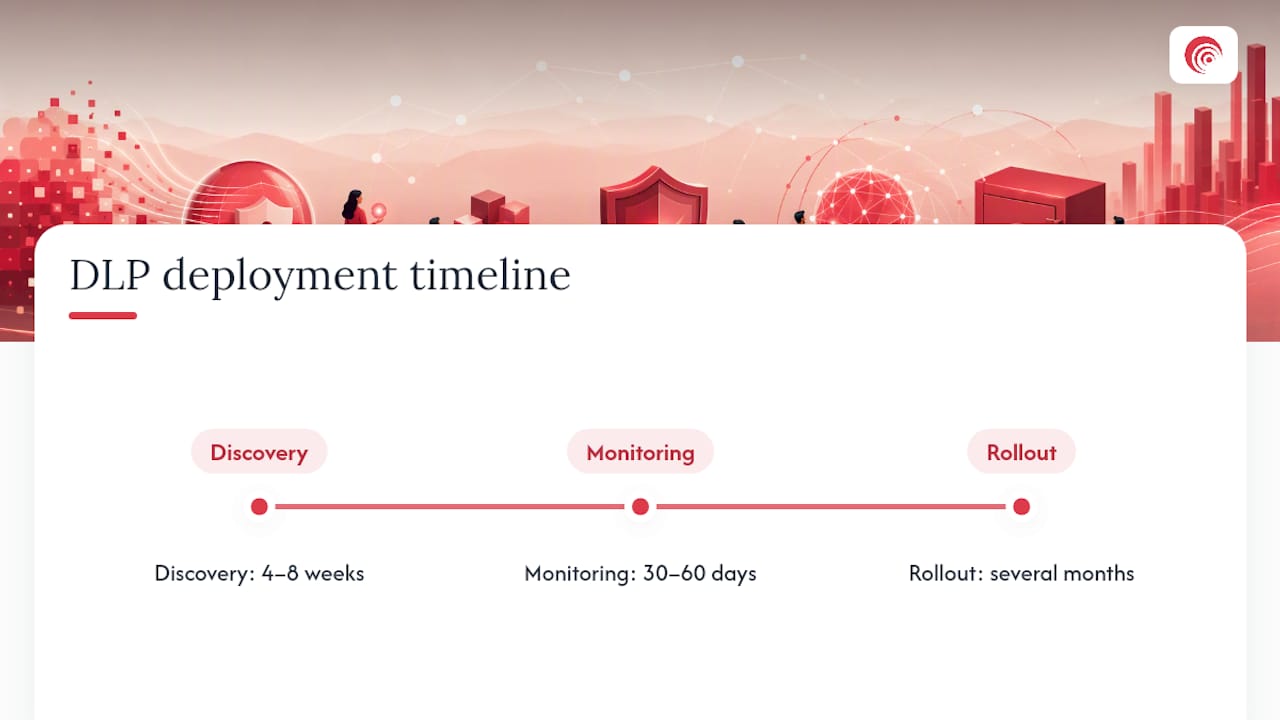
How long does a DLP deployment take? Discovery and classification typically take four to eight weeks depending on data volume. Monitoring before enforcement should run a full business cycle, often 30 to 60 days, before any blocking rule goes live. A realistic full rollout across all channels runs several months, not weeks.
Can small and mid-sized companies afford DLP? Yes, particularly with cloud and API-native DLP built into platforms many companies already license, like Microsoft Purview. The cost driver isn't usually the software. It's the staffing time needed to tune policies, which is exactly where managed services close the gap for teams without a dedicated security analyst.
What's the biggest mistake companies make with DLP? Enforcing before monitoring. Teams turn on blocking rules immediately, generate a wave of false positives against legitimate business activity, and lose user trust in the system within weeks. Monitor first, tune against real data, then enforce gradually.